

Long-term investing is simple in theory, but extremely difficult in practice.
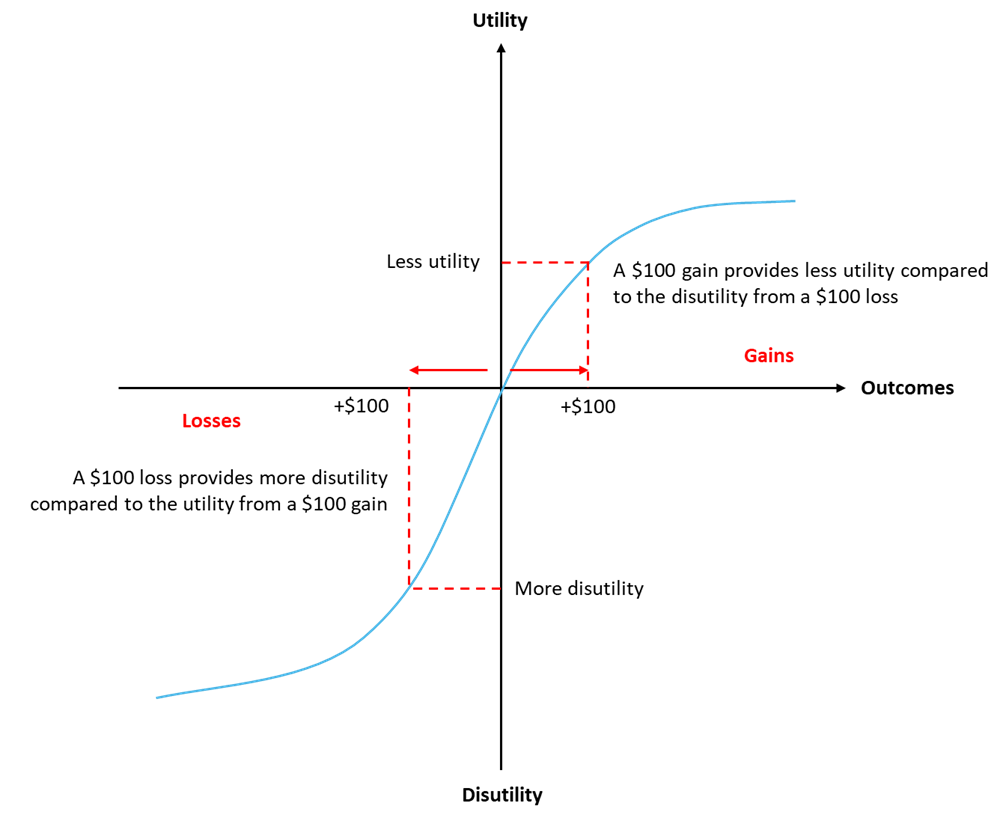
Prospect theory has postulated that humans are risk-adverse. The psychological pain of losing $100 is much greater than the pleasure of gaining $100. This trait naturally impacts investor behaviour.
Prospect Theory
By overreacting and not following through their own game book, most investors fail not because their strategy is flawed, but because they abandon it at precisely the wrong time.
Hence, to succeed, family offices need to adhere to the following principles:
- Patience and emotional control
- Overcoming cognitive biases
- Developing behavioural resilience
- Ignoring noises in favour of long-term growth
- Diversification to lower risk and volatility
Why Long-Term Discipline Is So Hard
Human psychology has evolved for short-term survival, not multi-decade capital compounding.
Even professional investors succumb to emotional roller coasters across market cycles. If left unchecked, these emotions and cognitive biases can cause family offices to compound errors.
Markets exploit these instincts relentlessly.
What Successful Long-Term Investors Do Differently
Institutions design structured processes to construct diversified portfolios that:
- Align with their true risk tolerance
- Meet cashflow and drawdown requirements
- Reduce the need for frequent decisions
- Make staying invested easier than panicking
- Allow independent oversight and governance
- Emphasise robustness over optimisation
They understand that the best strategy is the one you can stick with.
The Role of Governance and Process
Strong governance frameworks:
- Anchor expectations
- Prevent reactive decisions
- Reinforce long-term objectives
- Provide structure during periods of stress
This is why institutions outperform individuals with similar resources: not because they are smarter, but because governance structures and processes are in place to encourage repeated successes, and prevent catastrophic mistakes.
Key Takeaway
Long-term investing is not a test of intelligence. It is a test of emotional and organisational discipline.
#BehavioralFinance #DecisionMaking #WealthPreservation #FamilyOffice #AssetManagement