
Many portfolios are constructed the wrong way.
Family offices begin with asset classes, products, or recent opportunities—then they try to assemble something that looks diversified. The result is often a collection of investments, not a coherent portfolio.
Institutional investors take the opposite approach.
They start with first principles:
- What is the target real return?
- What level of volatility and drawdown is acceptable?
- What are the liquidity needs?
- What is the true investment horizon?
Only after defining these constraints do they begin constructing the portfolio.
This leads to a fundamentally different way of thinking.
Instead of allocating by labels (equities, bonds, alternatives), portfolios are built based on risk exposures and return drivers:
- Equities: growth and earnings sensitivity
- Credit: income with embedded downside risk
- Real assets: inflation protection and real yield
- Alternatives: diversification through differentiated return streams
The objective is not diversification for its own sake, but diversification of risk factors for proper risk budgeting.
This distinction becomes critical during market stress.
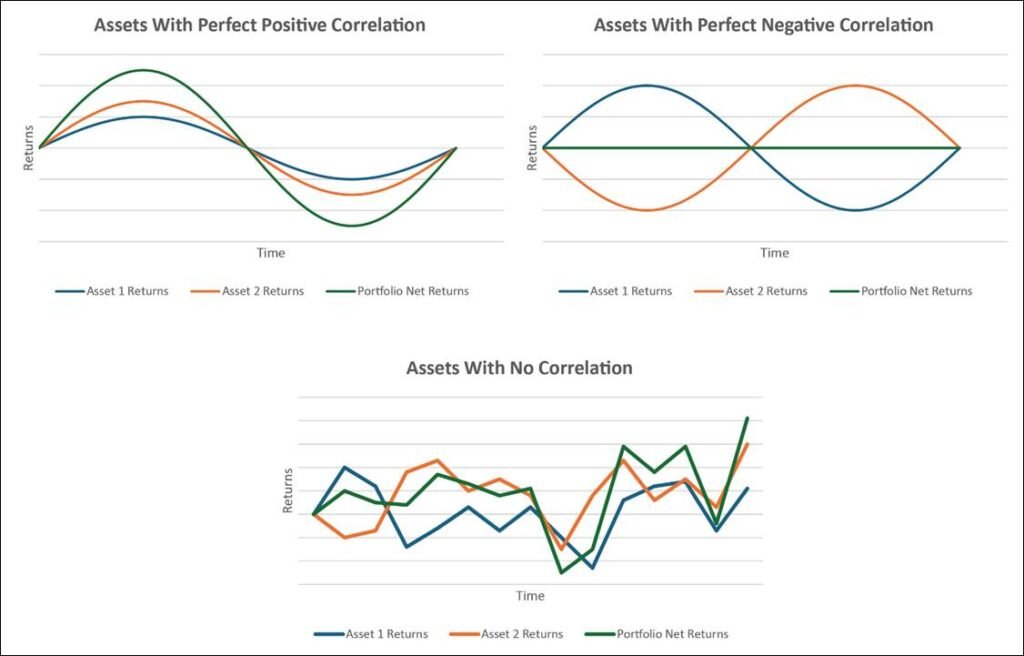
Source: Why Most Portfolios Underperform: The Hidden Cost of Uncompensated Risk, FTCP Insights, 7 Jan 2026
In benign conditions, many assets appear uncorrelated. In crises, correlations tend to converge — exposing hidden concentration risks. Portfolios that are not designed from first principles often fail precisely when resilience matters most.
A portfolio is not simply the sum of its parts. The way assets behave together—across different regimes—determines outcomes far more than individual asset performance.
For family offices, this is where the gap typically lies.
Access to high-quality investments is rarely the issue. The challenge is assembling those investments into a portfolio that is:
- Structurally coherent
- Aligned with long-term objectives
- Resilient across cycles
Key Takeaway
The goal is not to maximise returns in any single year. It is to engineer a portfolio that can survive, adapt, and compound over decades.
Because ultimately, long-term wealth is not built on individual investments. It is built on portfolio design.
#PortfolioConstruction #MultiAsset #FamilyOffice #AssetManagement #FTCPInsights