
Under-diversification is one of the most persistent and costly problems in family portfolios.
It rarely comes from ignorance. It comes from history, emotion, and success.
Why Diversify
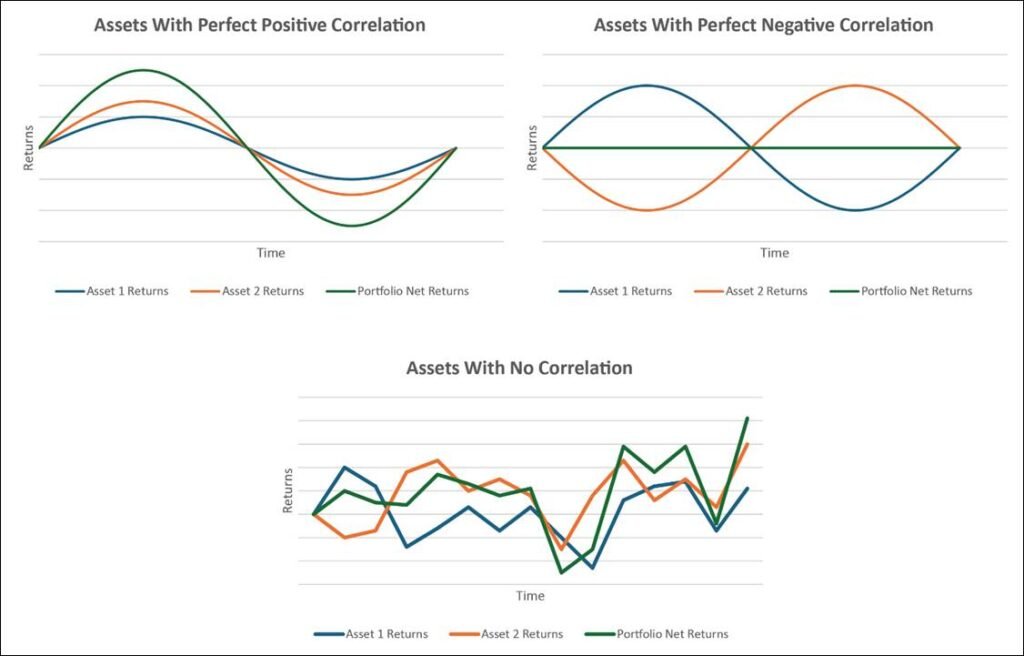
Source: FTCP Insights – Why Most Portfolios Underperform: The Hidden Costs of Uncompensated Risks, 7 Jan 2026
The correlation between different assets in the overall portfolio is crucial for overall portfolio returns. Highly correlated assets can have its returns enhanced in good times, but likewise it can also produce heightened losses when the tide turns.
In practice, diversification has shown to be able to:
- Mitigate (Unsystematic) Risk: By spreading investments, the impact of any single company or sector’s poor performance is reduced on the total portfolio.
- Lower Volatility: Through diversification in assets that have low or negative correlation, the overall portfolio volatility is reduced, smoothing out fluctuations.
- Improve Long-Term Returns: While it may not outperform a high-risk, concentrated portfolio in the short term, a diversified approach helps ensure a more stable and consistent growth over time, reducing the risk of a permanent capital loss
Why Concentration Happens
Most families build wealth through:
- A core operating business
- A specific industry
- A particular geography
Over time, familiarity becomes comfort, and comfort becomes concentration.
Common drivers include:
- Emotional attachment to legacy assets
- Home-country and home-industry bias
- Overconfidence in past winners
- Reluctance to reduce positions that “built the fortune”
The result is often a portfolio that may look diversified on paper, but is highly exposed to a small number of economic outcomes.
The Hidden Risk of Concentration
Concentration does not usually hurt during good times. In fact, it may outperform benchmarks due to its concentration. It hurts when:
- Industries face structural disruption
- Geopolitical and regulatory regimes change
- Technology shifts competitive dynamics
- Liquidity dries up at the wrong moment
At that point, family offices discover that diversification was never about enhancing return— it was about survivability over the long-term.
How Institutional Investors Approach Diversification
Endowments and large institutions think in terms of:
- Risk factors, not just asset classes
- Correlation under stress, not only in typical market conditions
- Volatility and cash flow requirements, including drawdown scenarios, not average returns
They diversify to ensure that no single mistake, black swan or shock can permanently impair the portfolio.
A Practical Path Forward
Effective diversification requires:
- Explicit concentration limits
- Risk-based budgeting and asset allocation frameworks
- Regular stress testing
- Willingness to rebalance away from emotional favourites
- Independent oversight systems
Key Takeaway
Diversification is not about owning more things. It is about reducing the number of ways your portfolio can fail.
#BehavioralFinance #DecisionMaking #WealthPreservation #FamilyOffice #AssetManagement