

Many families worry that professionalising their family office means losing control, culture, or flexibility. In reality, the opposite is usually true.
Professionalisation, done properly, is not about replacing family values with institutional bureaucracy. It is about ingraining these values and protecting those values through better systems that can last generations.
Values and Process Serve Different Roles
In successful family offices, there is a clear distinction between:
- Values: Set by the family and rarely changed
- Process: Designed to implement those values consistently over time
Values define what the family wants to achieve. Process defines how it gets done.
Problems arise when these two are conflated — when values are used to justify ad-hoc decisions, or when process becomes disconnected from family purpose.
Professionalising or institutionalising the family office can help to mitigate these potential problems.
As an example on how professionalising the family office can help, based on JP Morgan 2024 Global Family Office Report, some of the values that international families are concerned with for the next generation are:
How Concerned is the Family with the Following Issues
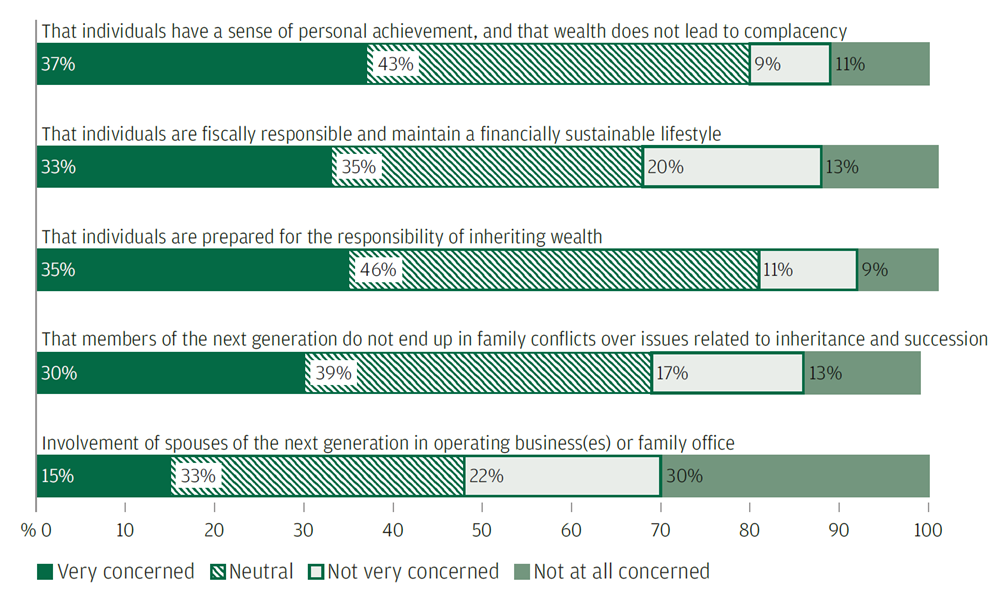
Source: JP Morgan 2024 Global Family Office Report
To implement these family values, processes need to be in place to engage the next generation. Professional family offices can then design these measures as follow:
Which of the Following Measures are in Place
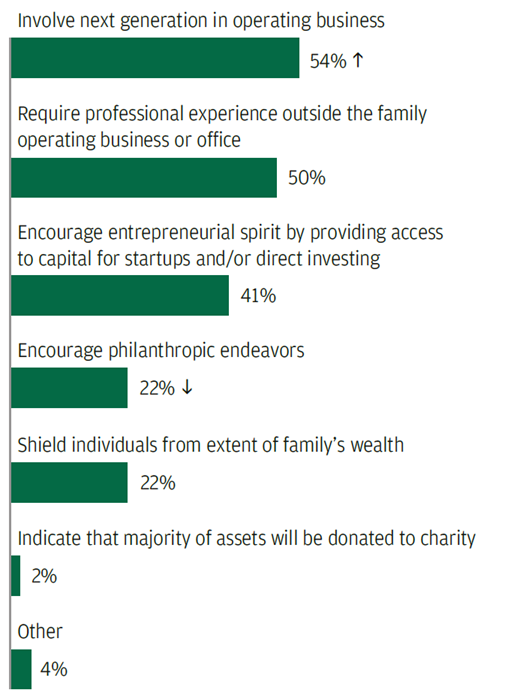
Source: JP Morgan 2024 Global Family Office Report
These processes and systems do not negate family concerns and values. They are designed to reinforce them systemically.
What Professionalisation Actually Means
At its core, professionalisation involves:
- Clear governance structures
- Defined decision rights
- Formal investment and risk frameworks
- Transparent reporting and accountability
- Repeatable processes that survive personnel changes
None of this removes family influence. It channels it more effectively and avoids uncertainties.
Why This Matters More as Wealth Grows
As portfolios become larger and more complex, informal decision-making becomes a liability. The cost of mistakes increases, and the impact of behavioural bias becomes more severe. These result in fragile systems that can implode especially during market stress.
Professional structures reduce:
- Key-person risk
- Emotional decision-making
- Strategy drift
- Operational fragility
These structures empower the family office to be scalable, sustainable and durable.
Control Through Systems, Not Micromanagement
True control does not come from approving every decision – that is impractical. It comes from designing systems that produce good decisions consistently, ie governance alpha that can survive and prosper over generations.
Families that embrace this shift often find they gain:
- Better visibility into risk, especially hidden and uncompensated risks.
- More consistent outcomes
- Less day-to-day stress
- Stronger long-term alignment
Key Takeaway
Professionalisation does not dilute family values. It preserves them across generations.
#FamilyOffice #Governance #Leadership #Stewardship #AssetManagement