
In the modern investment landscape, data is the new gold.
For decades, asset management was primarily driven by financial statements, economic reports, and market prices. Today, investors have access to vastly more information, including real-time and real-world data, ranging from satellite imagery to supply chain analytics. As an example, some hedge funds are known to analyse satellite images of retailers’ parking lots so as to predict sales performance.
However, the real advantage does not come from simply having more data. It comes from organising and interpreting that data effectively.
The Explosion of Data Sources
Investors now have the ability to analyse a wide range of information, including:
- Traditional financial data
- Alternative data sources
- Market sentiment indicators
- Macroeconomic datasets
- Supply chain and logistics information
This expansion of information has fundamentally changed the research process.
Instead of relying solely on quarterly financial reports, investors can now observe economic activity almost in real time.
Turning Data Into Insight
However, raw data is rarely useful on its own. The challenge lies in distilling and transforming large volumes of information into actionable insights.
Institutional investors achieve this through:
- Data engineering and structured databases
- Quantitative analytics platforms
- Machine learning tools, including neural deep learning networks
- Integrated research systems
Reiterative Process to Test Hypothesis to Help Decision-Making
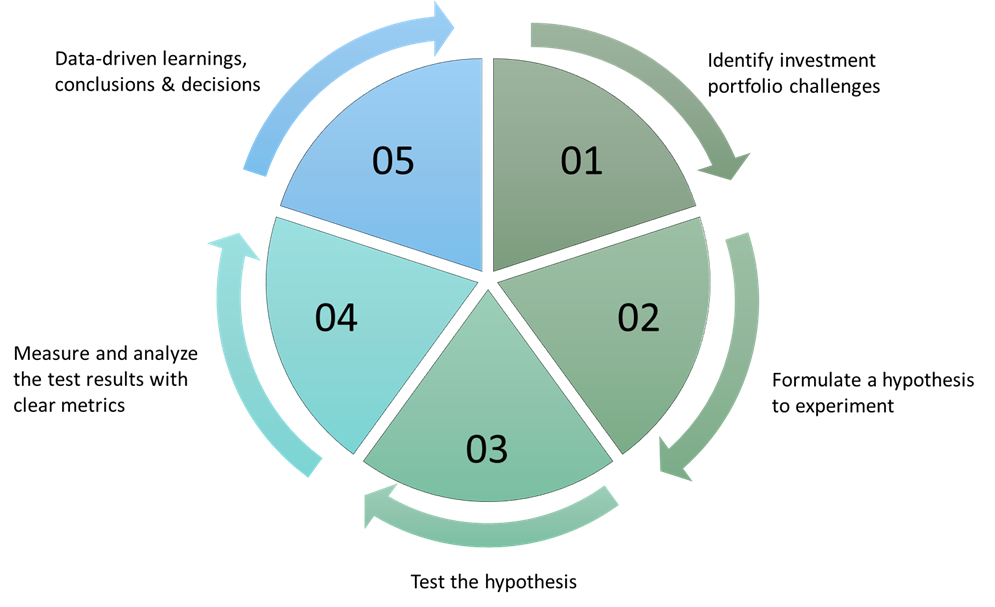
Source: FTCP internal guidebook, 2023
These systems allow analysts to test hypotheses quickly and identify patterns that would otherwise remain hidden.
Data and Investment Discipline
One of the most important benefits of robust data systems is improved decision discipline.
When decisions are supported by structured data and analytics, they become:
- More transparent
- More repeatable
- Less influenced by emotion
This does not eliminate the need for human judgement. In fact, it is especially important to guard against over confidence in relying on the data alone, and be cognisant of the danger of over-fitting and drawing correlations without casual relationships.
When used properly, data ensures that family offices can make investment decisions supported by evidence and structure rather than intuition alone.
A Competitive Necessity
In the near future, strong data infrastructure will not be a competitive advantage. It will be simply a baseline requirement.
Investment organisations that fail to build robust data capabilities risk falling behind in both research quality and risk management.
Key takeaway
In modern investing, capital compounds most effectively when it is supported by information systems that enhance clarity and discipline.
#Fintech #AI #InvestmentTechnology #FamilyOffice #AssetManagement #FTCPInsights