

Compared to the United States, the European markets have generally delivered lower returns, slower earnings growth and weaker economic momentum. While the 2 economies were comparable in size in 2008, USA is now approximately 50% larger than Europe today.
This has led some investors to reduce exposure or avoid the region altogether. As a result, European equities often trade at meaningful valuation discounts relative to their US counterparts.
The critical question is whether those discounts represent an opportunity—or a warning.
In other words, is Europe a value trap or a source of deep value?
Challenges and Opportunities
The pessimistic case is relatively well known. Europe faces several structural challenges:
- Aging populations
- Slower productivity growth
- Political fragmentation
- Higher regulatory burdens
- Greater dependence on imported energy
Compared to the United States, Europe has also produced fewer globally dominant technology companies over the past two decades.
These challenges have contributed to slower economic growth and lower investor enthusiasm.
However, dismissing Europe entirely would be a mistake. Despite its challenges, Europe remains home to many world-class businesses.
The region continue to host leading companies in:
- Luxury goods
- Industrial automation
- Pharmaceuticals
- Aerospace
- Renewable energy
- Advanced manufacturing
Many of these firms possess strong competitive advantages, global customer bases and resilient cash-flow generation.
A country or region can experience modest economic growth while still producing attractive investment opportunities. Likewise, strong economic growth does not automatically translate into strong shareholder returns.
Morningstar European Sector Indexes’ Price/Fair Value Ratios
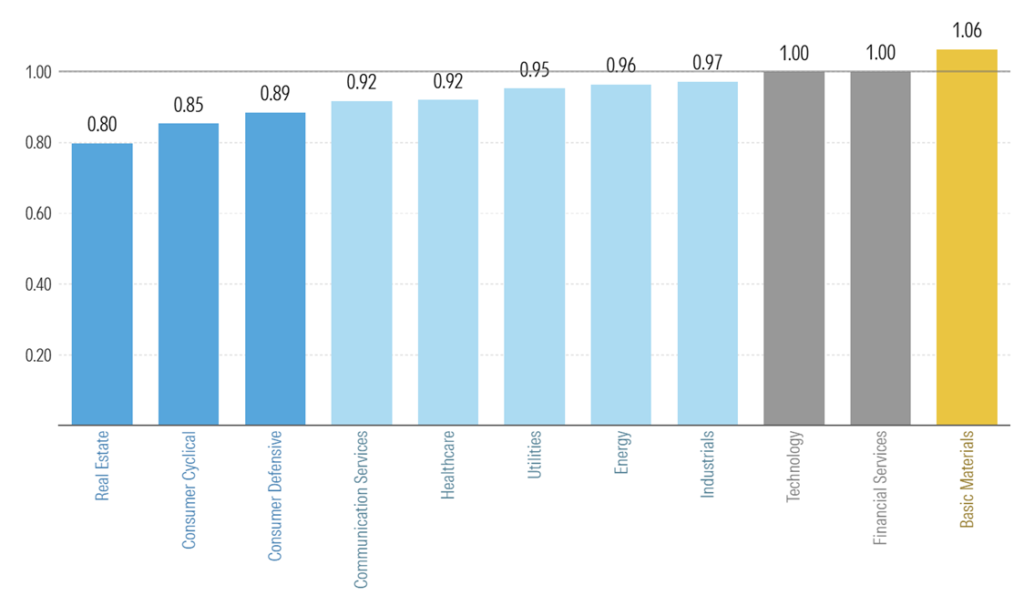
Source: Morningstar. Data as of 29 May 2026
Institutional investors increasingly focus on company fundamentals rather than broad regional narratives. Each sector’s performance and value differ as well, and should not be viewed as homogenous.
Instead of asking whether Europe will outperform or underperform, they ask:
- Which businesses possess durable competitive advantages?
- Which sectors are undervalued relative to long-term prospects?
- Are current valuations adequately compensating investors for the risks involved?
This distinction matters.
The best investment opportunities often emerge when sentiment becomes excessively pessimistic. At the same time, low valuations alone are not sufficient.
The challenge is identifying situations where market expectations have become too negative relative to future reality.
Key Takeaways
For family offices, Europe should neither be viewed as a guaranteed bargain nor dismissed as a permanently challenged region.
Rather, it should be approached with the same discipline applied to any investment opportunity: careful analysis, realistic assumptions and a focus on long-term value creation.
Successful investing is not about finding what is popular. It is about recognising when perception and reality have diverged.
#EuropeInvesting #ValueInvesting #GlobalMarkets #FamilyOffice #AssetManagement #FTCPInsights