

Most portfolios appear stable — until they are tested under real stress.
Stress testing, such as the example shown below, is designed to address this. However, in many cases, it may only provide false comfort rather than real insight.
Potential Implications for a Hypothetical 60/40 Equity/Bond Portfolio and Its Components
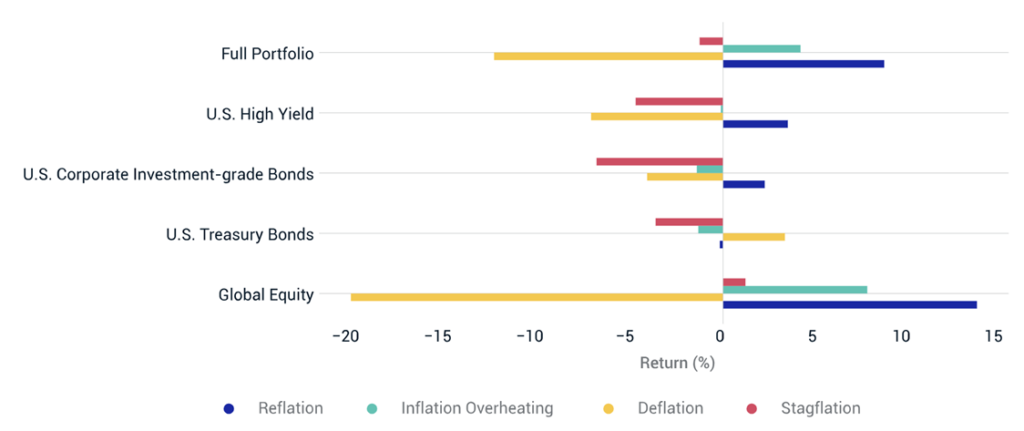
Source: Stress Testing Inflation Scenarios, MSCI, 24 Sep 2020
The problem lies in how it is often implemented. Traditional stress testing relies heavily on:
- Historical scenarios
- Linear assumptions
- Stable correlations between asset classes
In reality, crises rarely behave this way.
Correlation Dynamics Over Time
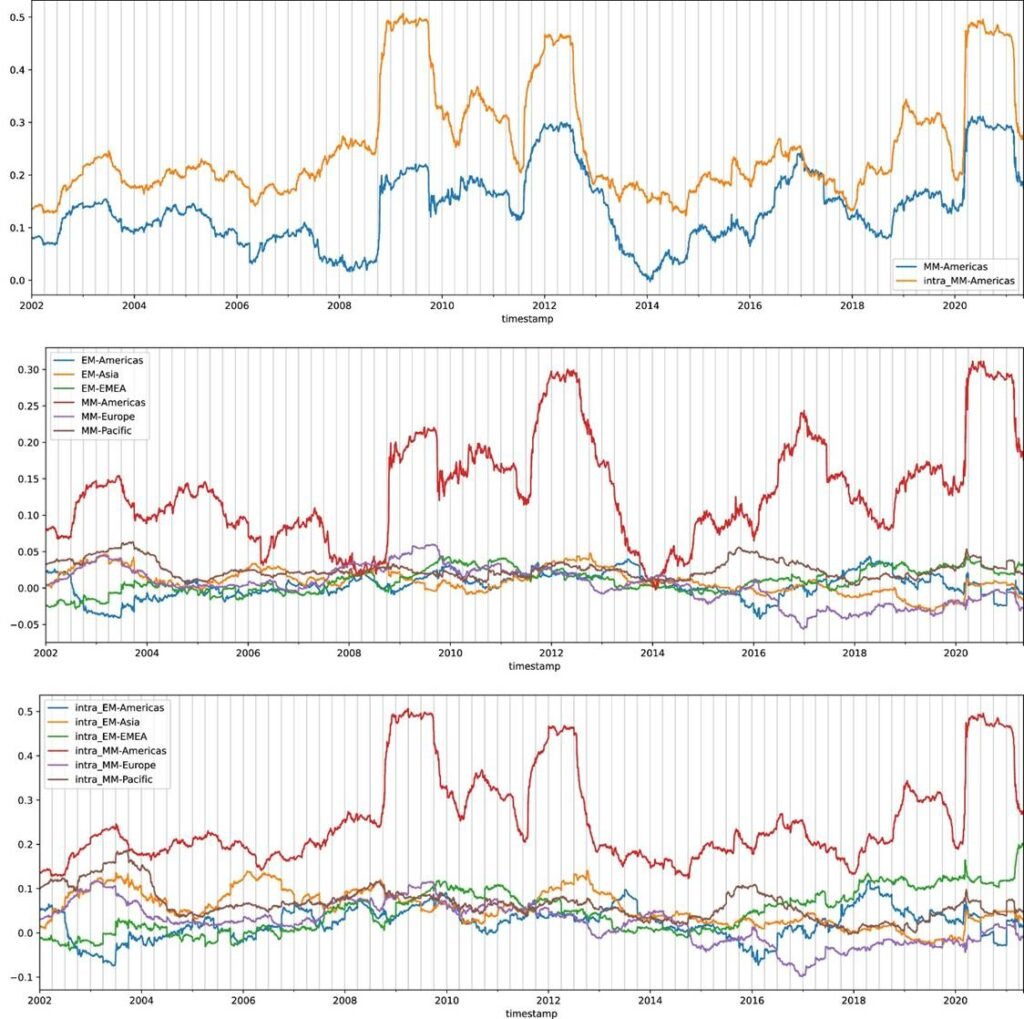
Source: Correlation Scenarios And Correlation Stress Testing, Journal of Economic Behaviour & Organization, ScienceDirect, Vol 205, Jan 2023
As observed, correlations spiked significantly during downturns, symptomatic for falling markets. This is clearly seen during the 2008 financial crisis, the subsequent debt crisis and most recently the 2020 COVID-19 pandemic.
During periods of stress:
- Correlations between different asset classes tend to converge (as seen clearly in the exhibit above)
- Liquidity deteriorates rapidly
- Price movements become non-linear
- Second-order effects amplify initial shocks
As a result, portfolios that appear diversified under normal conditions can become highly concentrated when it matters most.
Multi-Facet Approach to Stress Testing
Effective stress testing requires a different approach.
Instead of relying solely on historical events, institutional investors need to focus on:
- Multi-factor shocks: rates, credit spreads, liquidity conditions
- Scenario analysis across regimes: inflation shocks, growth shocks, policy errors
- Liquidity stress: ability to meet obligations under constrained markets
- Second-order effects: forced deleveraging, margin calls, redemption pressures
Equally important is understanding behavioural dynamics.
Even a well-constructed portfolio can fail if investors are unable to hold positions during drawdowns. Stress testing should therefore also consider:
- Governance structures
- Decision-making processes under pressure
- Tolerance for temporary losses
Identifying Points of Fragility
The objective is not to predict the next crisis. It is to identify points of fragility.
- Where does the portfolio become vulnerable?
- Which exposures create disproportionate downside?
- How does the portfolio behave when multiple risks materialise simultaneously?
When used correctly, stress testing is not just a reporting exercise. It becomes an essential portfolio design tool that is needed for overall portfolio risk management.
Key Takeaway
Portfolio stress testing helps refine asset allocation, improve diversification, and reduce the probability of permanent capital loss.
For multi-generational wealth stewardship, success is not defined by avoiding volatility. It is defined by surviving it—and continuing to compound thereafter.
#RiskManagement #StressTesting #PortfolioResilience #FamilyOffice #FTCPInsights