

The Asian Family Office landscape has evolved significantly in the last decade. This is influenced substantially with rising wealth creation, increasing sophistication among the more educated second and third generation family members, and the transformation of supply chains due to geopolitical developments.
Through our engagements with families across Southeast Asia and Greater China, we have observed three major shifts shaping family office strategies.
1. From Opportunistic Investing to Institutional Discipline
Early-generation family offices tended to be opportunistic and relationship-driven. Today’s next-gen leaders are adopting institutional frameworks:
- Clear strategic asset allocation (SAA)
- Dedicated investment committees
- Portfolio analytics and risk reporting
- Governance and risk management
- Investment Committees, professional CIO structures and independent advisors
This shift is expected to allow families to capture more consistent returns and better manage drawdown risks.
2. Increased Allocation to Alternatives
Family offices continue to raise allocations to private equity, private credit, real estate, and infrastructure. More than 60% of the family offices interviewed expect to increase allocation in infrastructure by up to 50% within the next 2 years. Similarly more than 30% expect allocation in private credit to increase by up to 50% in the same time frame. None of the families expect allocation to alternatives to remain unchanged.
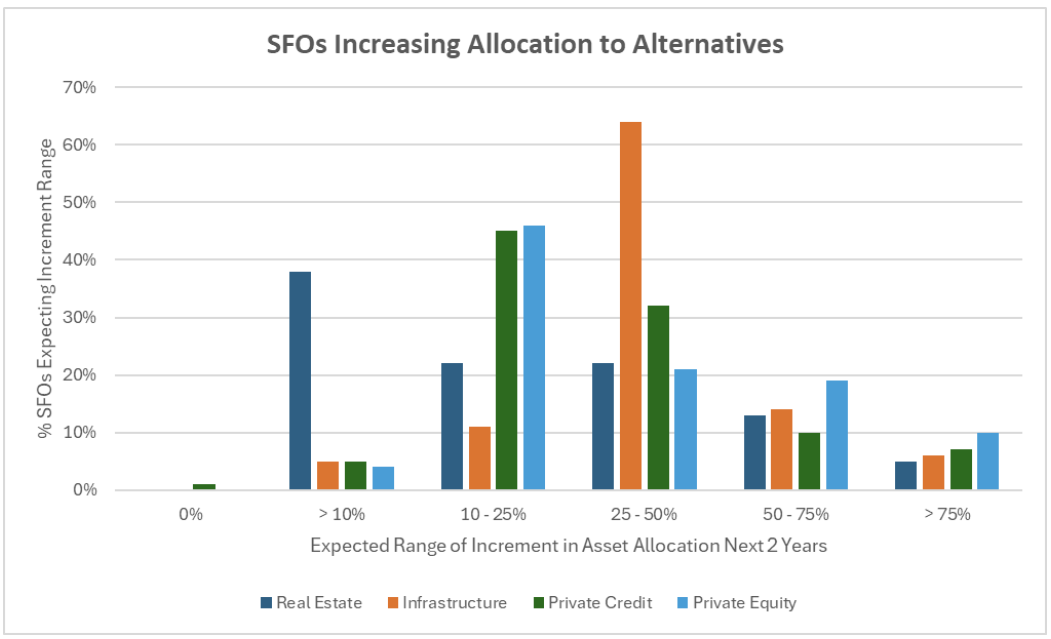
Source: Ocorian Research, Diversification boosts family office exposure to alternative assets, 12 Aug 2025
Primary drivers include:
- Search for stable income
- Diversification to reduce overall portfolio risks
- Inflation hedge
- Direct control and increase sophistication
- Higher risk-adjusted returns available for patient capital not found in listed markets
However, there is growing recognition of the need for vintage diversification, manager depth, and liquidity planning.
3. Rising Interest in Mission-Driven and Thematic Investing
Younger and more sophisticated family members increasingly push for investments aligned with values — from energy transition to AI-enabled productivity solutions. This trend is not about philanthropy; it’s about aligning purpose with long-term returns.
Key Takeaway
Asian family offices are becoming more sophisticated, disciplined, and globally oriented. With rising wealth and increasing capital, the families that develop strong governance and balanced portfolio structures will be best positioned for multi-generational success.
#TailRisk #PortfolioResilience #WealthManagement #FamilyOffice #AssetManagement #FTCPInsights